
Cloud Courses
Tired of servers in the basement? Cloud opens new doors for organizations to achieve flexibility, cost efficiency and availability in their IT solutions.
We hope to see you on a cloud course at SuperUsers!
Cloud technologies


Cloud computing will have you on cloud nine
We are your partner for cloud migration
SuperUsers has followed developments in the cloud for more than 10 years. We have a permanent team of instructors and consultants with extensive hands-on experience and theoretical knowledge in operations, development, and design of cloud solutions.
Cloud computing and the major players
The cloud, meaning cloud platforms, is taking over many of the services that would traditionally run on-premises. The major players in the Western market, Amazon Web Services (AWS), Google Cloud and Microsoft Azure, each offer comprehensive cloud solutions.

Cloud computing - three key service models
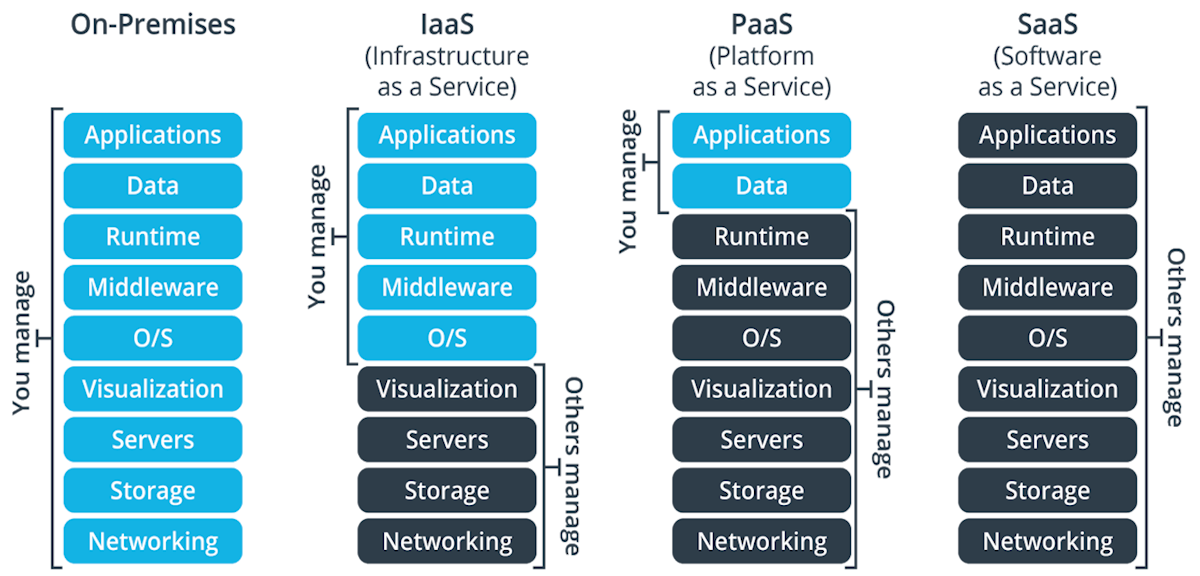
The three cloud service models
With cloud computing, you no longer need your own "servers in the basement," because services are delivered directly over the internet. Cloud computing covers several types of service models.
Infrastructure as a service (IaaS)
IaaS provides access to cloud-based physical and virtual servers, storage, and networking. It makes up the back-end IT infrastructure that can run an organization's applications and workloads in the cloud.
Platform as a service (PaaS)
PaaS provides access to a ready-made cloud environment where you can develop, host and manage applications. Here, the cloud provider is responsible for security, the OS and backups, among other things.
Software as a service (SaaS)
SaaS provides on-demand access to ready-to-use cloud-based applications. The cloud provider handles the data, maintenance and administration of the software, and access is via the web or an API.
Cloud computing - three key types of cloud
Private Cloud
Cloud is usually run in the organization's own data center, and the resources are used only internally.
Public Cloud
This is the type of cloud you know from AWS, Azure or Google Cloud, for example.
Hybrid Cloud
Combines elements of private and public cloud, providing greater flexibility without necessarily compromising on security and availability.